Introduction
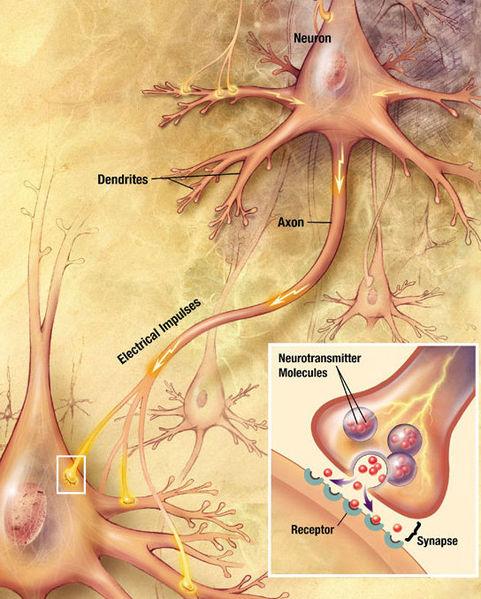
This brief website deals with the process of thinking both from biological point of view (plasticity of
neurons, emotional centers) and from point of view of mathematical description of problems and
their properties.
Let's start with the most important point which is so-called subjectivity principle. It is
a universaly valid natural pattern saying this:
Every problem is either solvable
at given moment or important only seemingly at that moment.
This natural law is valid with mathematical precision for everybody at
any moment.
There are two reasons for the
validity: first reason is that internal
values of man (feelings, emotional state) are superior to
everything else. For example when we get a new car, a house, success at
work, a nice relationship, good health or anything else that we value
high - what we get in reality
is satisfaction with the new car, pleasure from the new house,
satisfaction from the work success, nice feelings from the
interpersonal relationship, good mood based on the good health,
generally an internal state triggered by an external value. Shortly all
the external successes or failures are received in form of biochemical
activity of our emotional centres.
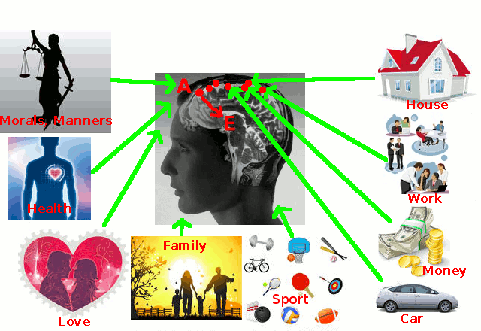
The second reason is that the neurons bringing signals to emotional centres (thus activating our feelings) possess the phenomenon of plasticity.
Plasticity of neurons is capability of neurons, their projections
(dendrits, axons) and connections (synapses) to grow up, to strengthen,
to weaken and to disappear - all as consequence of the process of
thinking. Plasticity of neurons and synapses is also the essence of the
long-term memory.
But what does it mean exactly that
the subjectivity principle is "universaly valid", "natural pattern",
what is it "problem", what does it mean "solvable", "important" and
"important only seemingly"? And isn't there a contradiction when our
life or health is in danger? Hopefully this introduction makes you
little curious or carping so that you will look more at this brief
website, think about it and create your own opinion. Thank you in
advance for any comments, discrepancies or contraditions send to the
email listed in the section author.